
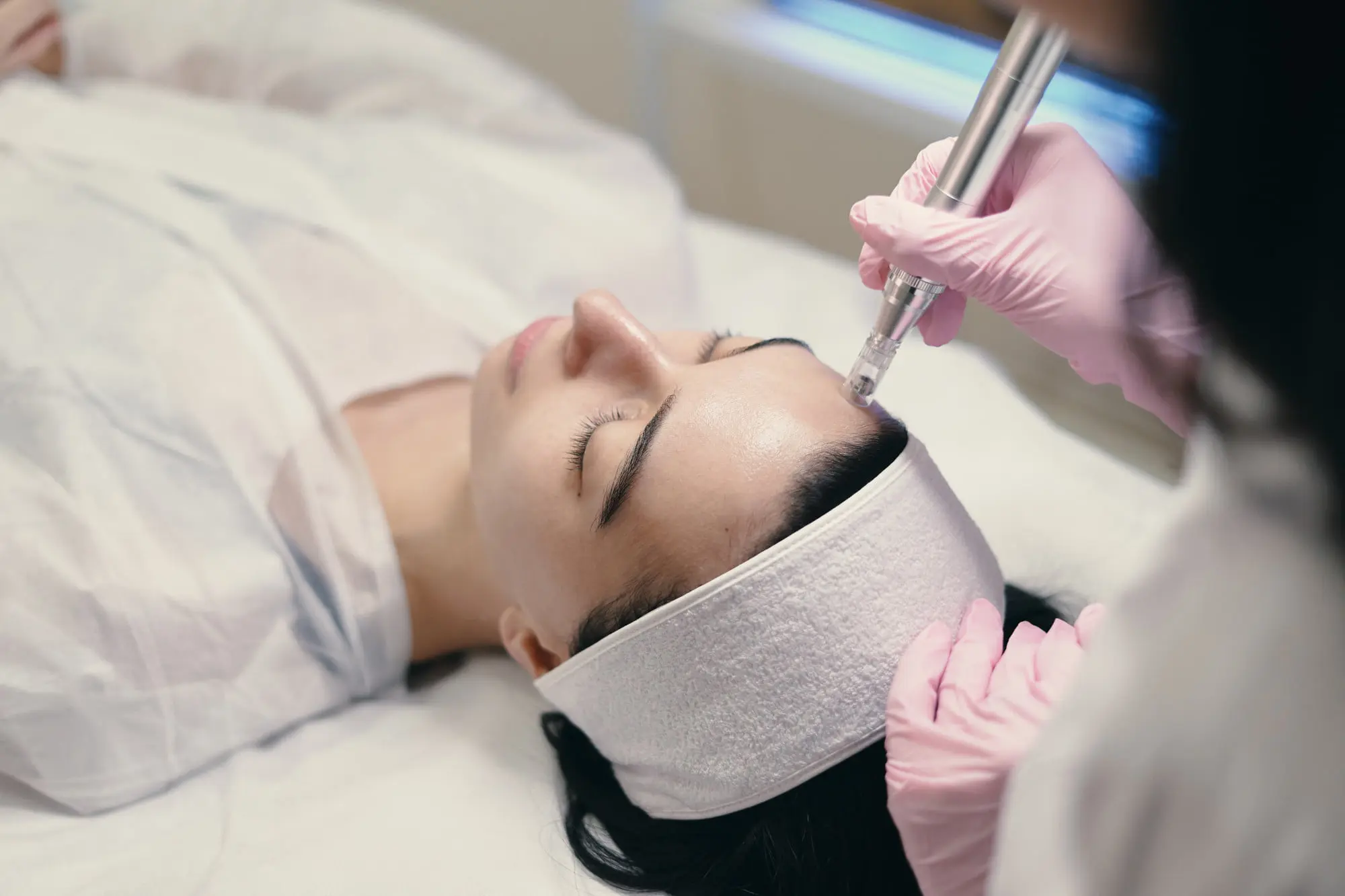
Microneedling is a safe and popular skin treatment. People also call it collagen induction therapy. It is a simple way to make your skin look healthier, smoother, and much younger.
The treatment works by making thousands of tiny, controlled pricks in your skin. These tiny pricks tell your body to heal itself. This natural healing response boosts two main proteins: collagen and elastin. These proteins keep your skin firm, tight, and strong.
According to the American Academy of Dermatology, microneedling can improve the appearance of acne scars, fine lines, wrinkles, and enlarged pores when performed by a qualified professional. Many people use microneedling to treat deep scars, wrinkles, and dark spots. This comprehensive guide will show you how the process works, what tools doctors use, how to prepare, and how to get the best results.
Now that you know the layers, we can look at the science of the treatment. Microneedling uses very thin, sterile needles to prick the skin.
The needles pass through the top layer. They make tiny holes in the middle layer, which is the dermis. These punctures are very small and clean. They do not cause real damage or leave permanent scars.
However, your skin thinks it has been hurt. It starts its natural repair system right away. During this repair process, your body rushes to make two vital things:
As these proteins grow, they renew your skin from the inside out. Since the surface of your skin stays mostly safe, you heal very quickly.
The tiny holes made by the needles act like small open pipes. For a short time, creams and serums can sink much deeper into your skin. Usually, the top layer of your skin blocks most creams. But after microneedling, these products can bypass the shield. This helps your skincare products work much better.
As we get older, our bodies naturally make less collagen. This starts in our mid-twenties. Over time, this loss leads to wrinkles, sagging, and a dull skin tone. Microneedling helps reverse these changes in a natural way.
New collagen fibers fill in the areas that have lost their volume. This restores the thick, bouncy feel of youthful skin. At the same time, new elastin fibers make the skin more flexible. Your skin starts to look tighter. The pores look smaller, and dry patches disappear.
Some skin treatments, like deep chemical peels or hot lasers, burn away whole layers of skin. This can cause a lot of pain. It also leads to long healing times and a high risk of scars.
Microneedling is much gentler. It targets only the tiny spots that need help. This precision allows for:
Over a few sessions, your skin tone becomes even, and your skin texture feels much smoother.
This treatment is highly versatile. It can target several common skin issues at the same time.
Many people use microneedling to fade deep acne scars. These scars happen when acne causes deep inflammation in the dermis. The body heals by forming stiff, fibrous bands of tissue. This pulls the skin down and creates pits.
The microneedling needles break up these old, stiff bands. As new collagen grows, it fills in the pits and valleys from underneath. Over time, the skin becomes flatter and smoother.
The treatment plumps up areas that have started to sag. It works well on common problem spots, such as:
The skin tightens naturally as the new collagen fibers mature and bond together.
Microneedling helps even out your skin tone by speeding up cell renewal. It breaks up the dark pigment clusters, also called melanin, that cause sun spots and melasma. When paired with skin brighteners, dark spots fade much faster because the product penetrates deeper.
Stretch marks are a type of deep scar that happens when the skin stretches too fast. This tears the collagen in the dermis. Microneedling stimulates new collagen in these torn areas to restore elasticity. It also softens hard, raised surgical or burn scars and helps blend their color back to normal.
Different tools can perform this treatment. Each tool has its own pros and cons.
A manual roller is a small handheld tool. It has a rolling drum covered in tiny needles. You roll it across your skin by hand to make the pricks.
These are motorized pens that move needles up and down very fast, like a tiny sewing machine.
This advanced tool combines needles with heat energy. The needles go into the skin and release brief pulses of radiofrequency heat deep inside the dermis. This heat causes the deeper tissues to contract and tighten immediately. It is highly effective for deep wrinkles, severe acne scars, and loose skin.
Knowing what happens during a visit can help you feel more comfortable. At Refresh MedSpa, experienced providers guide you through every step of the microneedling process and create a personalized treatment plan based on your skin concerns and goals.
First, your expert looks at your skin. They ask about your goals and check your medical history. They choose the best needle depth for your specific skin type.
The expert cleans your skin with a medical wash. This removes all dirt, oils, and makeup. It is vital to have a sterile surface so germs do not get into the tiny holes.
They apply a thick numbing cream to the treatment area. This cream sits on your skin to ensure you feel very little pain during the session.
The expert moves the pen or roller over your skin in sections. They might apply a slip serum, like hyaluronic acid, to help the tool glide smoothly.
Once the needles are done, they apply a soothing serum. This helps calm the skin and starts the healing process immediately.
Thanks to the numbing cream, the procedure is very tolerable. Most people only feel a light prickling, vibration, or a warm tickle.
Some areas, like the forehead or jawline, have less fat. You might feel a bit more pressure there. If you feel any sharp pain, tell your practitioner right away. They can easily adjust the speed or depth of the tool.
Your skin will show some signs of healing after the treatment. These are normal and mean the therapy is working.
Your skin will look like it has a mild to moderate sunburn. This is because of the increased blood flow. The face might feel tight and puffy.
Old, dead skin cells will flake off as new skin grows. This is normal. Do not pick or scratch at the flaking skin, or you might cause scars.
Your skin barrier heals completely. You will notice a smoother texture, a brighter complexion, and a healthy glow.
Your skin barrier is very sensitive and open after a session. Proper care is vital to prevent side effects like dark spots or infections.
Because microneedling opens up tiny pathways, it is the best time to apply high-quality serums. Your skin will drink them up.
This is a clean, hydrating booster. It is already found naturally in your body. It sinks deep down to plump your skin and calm redness. It is the safest product to use immediately after treatment.
Applying a gentle Vitamin C serum a few days after treatment helps brighten your skin tone and aids collagen growth. However, do not use it on day one, as it can cause burning.
These are small proteins that feed your skin cells. They speed up the healing process and help build stronger collagen fibers.
Microneedling is very safe for almost all skin types and tones. Unlike some lasers, it does not heat the skin, so it has a very low risk of causing dark spots on darker skin tones. However, you should still understand the risks.
Serious problems are very rare. The most common issues are temporary redness, swelling, and dry flaking. Infections can occur if tools are dirty or if you touch your face with dirty hands.
You should wait to get microneedling if you have:
Always talk to a doctor if you are not sure.
You will not see full results after just one visit. Collagen takes time to grow and mature.
Most people need 3 to 6 sessions to see the best results. You should space these visits 4 to 6 weeks apart. This gives your skin enough time to heal and build new tissue between sessions.
Once you reach your goal, your skin will continue to age naturally. To keep your skin glowing, you can do one maintenance session every 3 to 6 months.
Microneedling is a fantastic, natural way to refresh your skin. It does not rely on harsh chemicals or extreme heat. Instead, it uses your body’s own healing power to smooth out scars, fade dark spots, and erase wrinkles.
To get the best results, always talk to a trained skin expert. They can build a custom plan that fits your skin type, budget, and goals. With a little patience and proper aftercare, you can achieve smooth, radiant skin that lasts for years. If you’re ready to take the next step, book a consultation to discuss which treatment option is the best fit for your skin and aesthetic goals.
It is a simple skin treatment. It uses tiny, sterile needles to prick the skin. This triggers your body’s natural healing to build new collagen and elastin.
Most experts apply a numbing cream first. Because of this, you will only feel a light tickle, vibration, or mild prickle.
Most people need 3 to 6 treatments to see the best results. You should space these visits 4 to 6 weeks apart.
You can use home rollers, but they are not as deep or safe as professional pens. Professional tools give better results with less risk of skin damage.
Use a gentle cleanser, a plain moisturizer, and a hyaluronic acid serum. Avoid harsh anti-aging creams, makeup, and direct sun for a few days.