
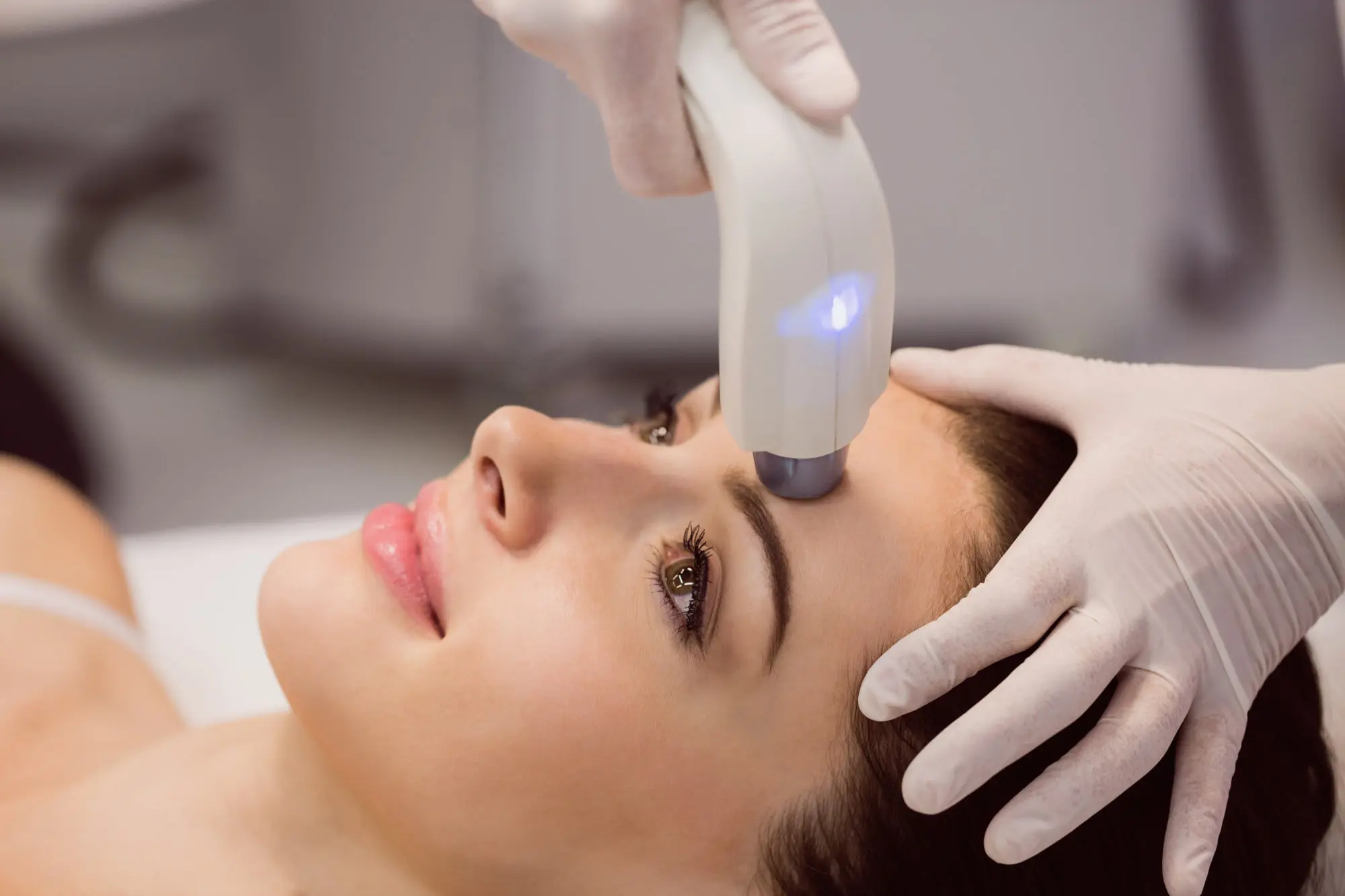
BBL photofacial is a popular choice for people who want brighter, more even skin without surgery. But what does BBL photofacial actually treat, and just as importantly, what should you expect it to leave alone? This guide walks through exactly which skin concerns respond well to BBL photofacial, how the treatment works, and what to expect from start to finish.
BBL stands for BroadBand Light. It’s a non-invasive treatment that uses pulses of light to improve skin tone and texture. Unlike surgery, there are no incisions and no anesthesia. Because of this, most people return to their normal routine right after a session.
During treatment, the light is absorbed by two main targets in the skin. These are melanin, the pigment behind spots and discoloration, and hemoglobin, the pigment inside small blood vessels. As a result, pigmented spots fade and visible redness calms down over the following days and weeks.
At the same time, the gentle heat from the light reaches the deeper layer of skin, called the dermis. This warmth activates fibroblasts, the cells that produce collagen. In other words, BBL photofacial doesn’t just fade discoloration on the surface. It also nudges the skin toward producing more of its own natural support structure over time.
Yes. BBL photofacial uses technology that has been through the FDA clearance process for treating pigmented and vascular skin concerns. According to a clinical overview from the National Institutes of Health, the first light-based device in this category received FDA clearance back in 1995. Since then, the technology has expanded into treating a wide range of pigment, redness, and photoaging concerns. Today’s BBL platforms, such as the Sciton BBL HERO system used in many clinics, build on that same well-established foundation. The result is more consistent, faster treatment for patients.
Because settings can be adjusted for each patient, an experienced provider can also tailor the treatment to different skin types and sensitivities. This flexibility is one reason BBL photofacial has remained a trusted option for so long.
BBL photofacial is especially effective for concerns tied to pigment and blood vessels near the skin’s surface. Specifically, it’s most often used for:
Below, we’ll look at each of these in more detail.
Pigmentation problems like freckles, age spots, and hyperpigmentation often develop after years of sun exposure, hormone shifts, or skin inflammation. Because BBL photofacial targets melanin directly, it works well on these concerns.
Here’s how it plays out for each concern:
Consequently, many patients dealing with stubborn discoloration that hasn’t responded to creams or serums find BBL photofacial a useful next step.
Sun exposure is one of the biggest drivers of visible skin aging, especially here in Southwest Florida. Over time, UV rays cause a mix of problems: uneven pigment, broken capillaries, rougher texture, and a loss of the skin’s natural bounce.
BBL photofacial addresses several of these issues at once. The light targets both the pigment and the tiny blood vessels involved in sun damage. As a result, patients often see improvement in more than one concern from the same session. Additionally, the mild heating effect supports new collagen growth, which gradually improves texture alongside the color changes.
Redness from rosacea or visible broken capillaries responds well to BBL photofacial because the light specifically targets hemoglobin, the pigment that makes blood vessels appear red. When the vessel absorbs this light energy, it gradually fades from view over the following weeks.
This is a chronic pattern for many patients, so ongoing maintenance sessions are often part of a long-term rosacea plan rather than a single fix. Still, most people notice a real reduction in overall redness after a series of treatments.
BBL photofacial can help fade the pink or red marks that linger after a breakout heals, since those marks are caused by tiny surface blood vessels rather than true pigment. However, it’s important to set the right expectation here. Active, inflamed acne itself is generally better treated with Forever Clear BBL. This is a related but separate protocol, built specifically for acne-prone skin. Standard BBL photofacial is best thought of as a redness-and-pigment treatment, not a primary acne treatment.
While BBL photofacial isn’t primarily a texture treatment, it still helps. The collagen stimulation triggered by the light can produce a modest improvement in fine lines and overall texture over a series of sessions. For more noticeable texture concerns, though, a resurfacing treatment like Moxi is generally a better fit, since it works at a deeper level than BBL alone. Many providers pair the two in a Moxi + BBL combination plan for patients who want both pigment correction and texture improvement.
It’s also worth being clear about what BBL photofacial does not treat well: deep, static wrinkles and sagging or loose skin. These are structural concerns tied to volume loss and reduced skin elasticity, not surface pigment. As a result, they respond better to a dermal filler, Botox, or a dedicated skin-tightening approach than to light-based treatment alone.
BBL photofacial works on several areas of the body, not just the face. Common treatment areas include:
Overall, this flexibility is part of why BBL photofacial fits so easily into a broader skin care plan, whether you need one small area addressed or a more complete refresh.
It helps to understand what’s actually happening beneath the surface during a session. First, the device delivers a broad range of light wavelengths in a quick pulse. Then, that light is absorbed selectively by melanin and hemoglobin, since these two substances are naturally better at soaking up light energy than the surrounding skin.
Because of this selective absorption, the surrounding tissue stays largely undisturbed while the targeted pigment or vessel heats up and breaks down. Meanwhile, the mild warming reaches the dermis below, which is where new collagen gets built. This is a well-documented mechanism. It’s consistent with the broader category of light-based skin treatments described by The Aesthetic Society. This type of light therapy is commonly used to reduce redness, visible vessels, and pigment-related discoloration.
In short, BBL photofacial doesn’t simply mask a problem on the surface. Instead, it works with the skin’s own healing response to gradually clear pigment and calm redness over the following weeks.
Most people need a series of three to five sessions, spaced about three to four weeks apart, to see the fullest results. That said, some patients with more significant sun damage or pigment may need a few additional sessions.
As for timing, a single session on the face usually takes 20 to 45 minutes, while larger areas like the chest can take a bit longer. Afterward, mild redness or slightly darker pigment is common for a few days, similar to a light sunburn, before it fades or flakes away naturally.
To protect your results, keep these aftercare basics in mind:
Following these steps helps make sure the improvements from each session actually stick.
Compared with more invasive procedures, BBL photofacial offers a different set of trade-offs. Here’s how it stacks up:
| Feature | BBL Photofacial | Laser Resurfacing | Chemical Peels | Surgical Facelift |
| Non-invasive | Yes | No | Partially | No |
| Typical recovery | Hours to 1–2 days | 1–2 weeks | Days to a week | Weeks to months |
| Risk of scarring | Very low | Moderate | Low to moderate | Higher |
| Discomfort level | Mild | Moderate to significant | Mild to moderate | Significant |
| Best suited for | Pigment, redness, mild texture | Deeper texture and scarring | Surface tone and texture | Sagging skin and volume loss |
As the table shows, BBL photofacial isn’t a replacement for every other treatment. Instead, it fills a specific niche: visible results for pigment and redness, with very little downtime. For concerns like significant sagging skin, a surgical option or a dedicated skin-tightening treatment will typically work better. It’s a good thing to know this upfront, rather than after a session that doesn’t meet expectations.
So, what does BBL photofacial treat? In short, it’s a strong option for sun damage, sunspots and age spots, redness from rosacea or broken capillaries, uneven pigmentation, and acne-related marks — all with minimal downtime. On the other hand, it isn’t the right choice for deep wrinkles, sagging skin, or active acne breakouts, which respond better to other treatments.
Before booking, it’s worth speaking with a qualified provider. They can evaluate your specific skin and confirm whether BBL photofacial, a combination approach, or a different treatment altogether is the better fit for your goals.
BBL photofacial, or BroadBand Light therapy, is a non-invasive treatment that uses pulses of light to target pigment and blood vessels in the skin. In doing so, it fades discoloration, calms redness, and encourages new collagen production for an overall brighter look.
BBL photofacial treats pigmentation issues like freckles, age spots, and hyperpigmentation, along with sun damage, rosacea, broken capillaries, and acne-related redness. It also offers a mild improvement in fine lines and texture, though it isn’t the best option for deep wrinkles or sagging skin.
It can help with some pigment concerns, but melasma specifically needs a more cautious approach, since heat-based treatments can occasionally make it worse. A consultation is the best way to find out if BBL photofacial is appropriate for your specific case.
Not directly. Standard BBL photofacial is better suited to the redness left behind after a breakout heals. For active, inflamed acne, Forever Clear BBL is the more appropriate treatment.
Most patients need a series of three to five sessions, spaced three to four weeks apart, for the fullest results. Milder concerns may improve with fewer sessions.