
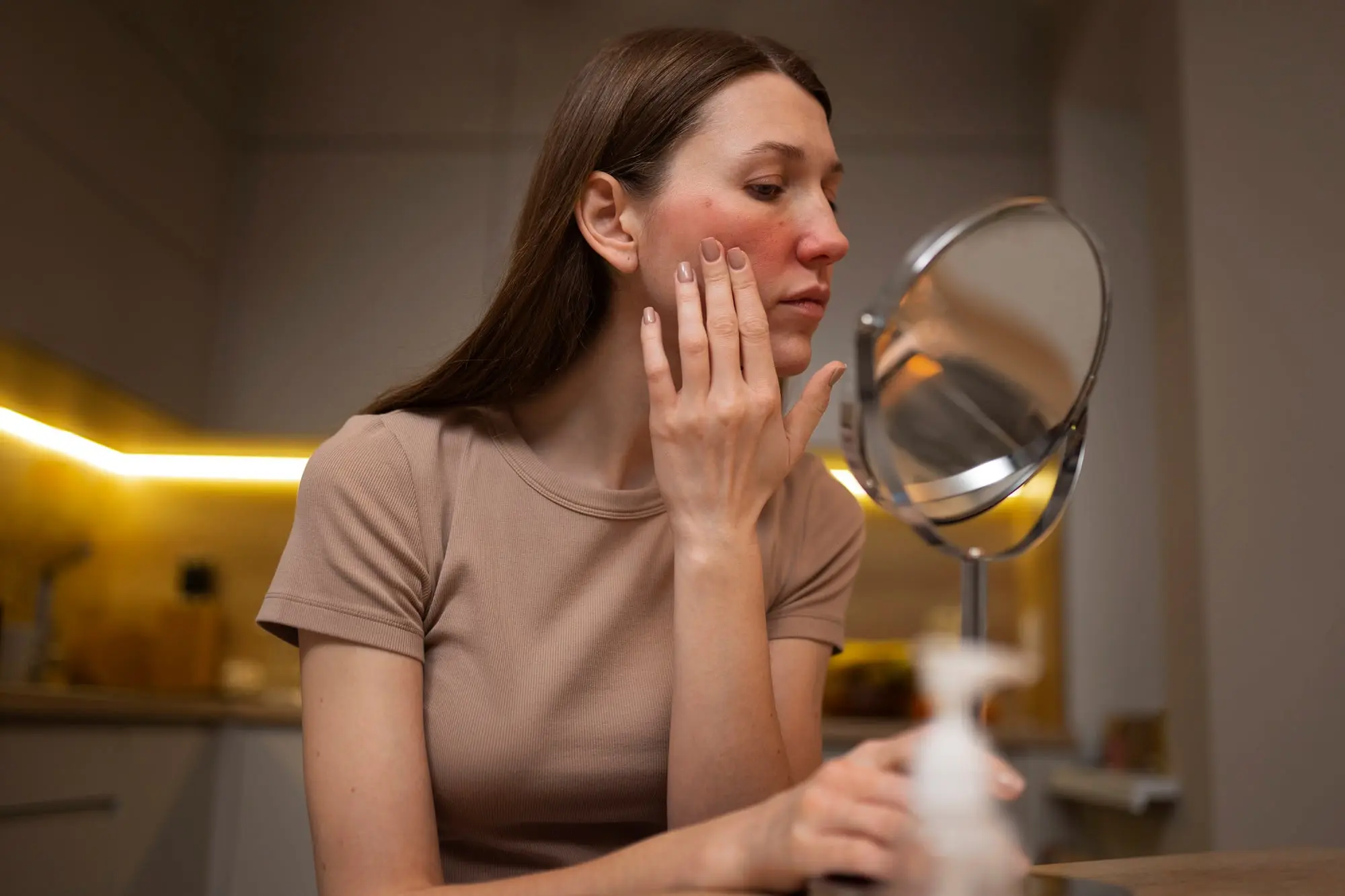
If you have rosacea, you’ve probably noticed that certain things reliably bring on redness, burning, or breakouts. Knowing what triggers rosacea flare-ups is one of the most useful things you can learn about managing this condition, since skipping your personal triggers can meaningfully cut down how often and how badly your skin reacts.
Rosacea is a long-term skin condition that mainly affects the face. It causes redness, visible blood vessels, and sometimes small bumps that look like acne. According to the National Rosacea Society, a survey of over 1,200 rosacea patients found that 96% of people who identified their personal triggers saw fewer flare-ups after skipping them. In other words, figuring out your triggers isn’t just helpful — it’s one of the most effective tools available.
A flare-up starts with your blood vessels. They widen, which sends more blood to the surface of your skin. This is what causes the redness and warmth you feel. At the same time, your immune system releases chemicals that cause swelling and irritation. Meanwhile, your skin’s outer barrier can also weaken during this process, making it more sensitive than usual.
Flare-ups look different for everyone. Some people deal with mild flushing for an hour or two. Others, however, experience redness, swelling, and discomfort that lingers for days. Overall, how long and how severe a flare-up gets often depends on which trigger caused it, how sensitive your skin is, and how well your rosacea is currently managed.
This is one of the biggest triggers for most people with rosacea. UV rays widen blood vessels and cause inflammation, which quickly leads to redness and flushing. In fact, the American Academy of Dermatology lists sun exposure as one of the most common rosacea triggers of all, affecting people of all skin tones.
A few habits, however, help protect your skin:
Both heat and cold can set off a flare-up. Hot baths, saunas, and warm weather all widen blood vessels as your body tries to cool down. Cold air, on the other hand, dries out your skin, and it can cause a rush of blood flow once you move somewhere warm.
To reduce temperature-related flare-ups:
Stress is a bigger trigger than many people realize. When you’re stressed, your body releases hormones like cortisol and adrenaline, and these widen your blood vessels in the same way heat does. Because of this, even a stressful moment can bring on visible flushing.
A few habits that genuinely help lower stress-related flare-ups:
These are common triggers because they raise blood flow to your face almost immediately. Chili peppers, cayenne, and similar spices contain compounds that widen blood vessels. Meanwhile, hot coffee, tea, and soup can do the same simply because of their temperature.
Keeping a food diary is one of the easiest ways to spot your personal triggers here, since not everyone reacts to the same foods.
Red wine, in particular, is a well-documented rosacea trigger. Compounds in it widen blood vessels, which is why flushing often follows shortly after drinking. According to the National Rosacea Society, wine was cited by about half of rosacea patients surveyed as a trigger, more than any other beverage.
If alcohol affects your skin, a few adjustments can help:
Certain skincare ingredients can irritate rosacea-prone skin directly. Common culprits include fragrances, alcohol-based formulas, harsh exfoliants, and some preservatives. In fact, even products labeled “unscented” sometimes contain masking fragrances that still cause a reaction.
Instead, look for gentle, fragrance-free products, and patch-test anything new before applying it to your whole face. Calming ingredients like niacinamide, ceramides, and green tea extract tend to be better tolerated.
Working out itself isn’t a problem, but intense activity in heat can be. Your body increases blood flow to your skin to cool down, which can bring on flushing and redness, mainly in a hot gym or during outdoor workouts in summer. Naturally, the more intense the workout and the hotter the environment, the more pronounced this reaction tends to be.
Instead, exercising during cooler parts of the day, choosing lower-impact activities, and wearing breathable clothing can all help you stay active without triggering as many flare-ups.
Shifts during puberty, menstruation, pregnancy, and menopause can also affect rosacea. For example, declining estrogen during menopause may affect how your blood vessels behave, while hormonal swings during your cycle can increase sensitivity for some people. Similarly, some patients notice their skin becomes more reactive during pregnancy, likely due to broader shifts in circulation and immune activity. Researchers are still studying exactly why this happens, but many patients notice a clear pattern between their hormones and their skin.
Occasional flare-ups are one thing, but frequent, unmanaged flare-ups can, over time, lead to lasting changes in your skin:
Because of this, trigger avoidance works best alongside professional care, not instead of it.
Once you know your personal triggers, the goal is to build them into your daily routine rather than treating them as occasional reminders:
Trigger management helps, but it usually works best paired with professional guidance. A dermatologist experienced in rosacea can build a care plan around your specific triggers, prescribe topical or oral treatments when needed, and offer options like laser therapy for visible blood vessels that don’t respond to lifestyle changes alone. Indeed, specialists who focus on inflammatory skin conditions understand that managing rosacea well usually means combining trigger avoidance with consistent medical care, not relying on one approach alone.
So, what triggers rosacea flare-ups? For most people, it comes down to a mix of sun exposure, temperature extremes, stress, certain foods and drinks, alcohol, skincare ingredients, heat during exercise, and hormonal shifts. Because triggers vary so much from person to person, tracking your own patterns is the most reliable way to figure out what actually affects your skin.
Consistent trigger management, combined with the right skincare and professional support, gives you real control over your rosacea rather than just reacting to flare-ups as they happen. If persistent redness or visible blood vessels are affecting your confidence, a personalized rosacea treatment plan can help address what triggers alone can’t fully resolve.
Ready to talk through your options? Book a consultation to get a plan built around your skin.
Sun exposure is one of the most frequently reported triggers, affecting people across all skin tones. Heat, stress, and alcohol are also very common.
Yes. Stress hormones widen blood vessels in the same way heat or sun exposure can, which is why emotional stress is considered a major trigger on its own.
No. Triggers vary quite a bit from person to person. Keeping a simple diary of flare-ups and recent activities is one of the best ways to identify your own patterns.
Often not completely. Trigger avoidance helps a lot, but combining it with professional treatment gives you the best chance at long-term control.
It varies by person and trigger. Some reactions, like flushing from alcohol or spicy food, happen almost immediately, while others build up more gradually.
Individual results may vary. This article is for general informational purposes and does not replace a personalized consultation with a licensed provider.