
Morning Facial Puffiness: Normal Bloating or Something Else?
Condition: Facial Puffiness
Morning facial puffiness is common, and most of the time it is harmless. You lie flat all night, fluid settles in your face, and you wake up looking a little swollen. Cleveland Clinic notes that slight puffiness on waking that goes away within a few hours is probably not a cause for concern. Puffiness that lingers, gets worse or comes with pain is a different matter.
Many people call it facial bloating. This guide covers why it happens, what makes it worse, how to reduce it, and the signs that mean you should call a provider.
Why Morning Facial Puffiness Happens
Your body moves fluid around all day. While you stand or sit, gravity pulls fluid toward your legs. When you lie flat for hours, that fluid spreads out more evenly, and some of it collects in your face, especially around the eyes.
Sleep slows things down too. You barely move, so your lymph system, which clears extra fluid from your tissues, works more slowly, and a little fluid builds up in the soft tissue of your face overnight.
Once you get up, gravity and movement help that fluid drain, which is why most people look better by mid-morning. The Mayo Clinic lists fluid retention, especially upon waking or after a salty meal, among the common causes of puffiness around the eyes.
Common Causes of Morning Facial Puffiness
Several everyday things can make morning facial puffiness worse:
- Sleep position. Sleeping flat, especially face down, lets fluid pool in your cheeks and eyelids.
- Salty food. Salt makes your body hold on to water, so a salty dinner can show up on your face the next morning.
- Alcohol. It can dehydrate you and widen blood vessels, which may leave your face looking flushed and puffy.
- Too little or too much sleep. Cleveland Clinic notes that facial swelling can be more noticeable after either one.
- Allergies and sinus trouble. Dust, pet dander and pollen can inflame the tissue around your eyes and nose, and lying down lets fluid collect there. A sinus infection can also make the face swell.
- Hormone shifts. Some people notice more puffiness around their period, when premenstrual changes can cause fluid retention.
- Smoking. The Mayo Clinic lists smoking among the factors that make under-eye puffiness worse.
- Some medicines. Drug reactions and side effects can cause facial swelling; Cleveland Clinic gives prednisone as one example. Do not stop a prescribed medicine on your own: ask the prescriber.
Aging and genes play a part too. As you get older, the tissue that supports your eyelids weakens, and the Mayo Clinic notes that fat around the eye can then move into the lower lids, which looks puffy even when there is no extra fluid. Under-eye bags can also run in families. Unlike fluid, this kind of puffiness does not fade by midday.
Is Morning Facial Puffiness Normal?
In most cases, yes. Normal morning facial puffiness usually looks like this:
- Puffiness shows up right after you wake up.
- Both sides of your face look about the same.
- Swelling improves within 30 minutes to a few hours as you stay upright and moving.
- There is no pain, itching or warmth.
- It follows a pattern, such as after salty meals, drinks or a bad night’s sleep.
If that matches what you see, you are most likely looking at normal overnight fluid shifts.
When Morning Facial Puffiness Might Be Something Else
Sometimes puffiness is a signal, not just a habit. Pay attention if you notice:
- Swelling that lasts all day or gets worse instead of better
- Puffiness that builds over weeks, especially with fatigue, weight changes, or swelling in other parts of the body
- Pain, warmth, redness or fever, which can point to inflammation or infection
- Swelling on one side only
- Vision changes, eye irritation, headaches or a skin rash along with the swelling
Several medical conditions can cause facial or eye swelling. The Mayo Clinic lists dermatitis, kidney disease and thyroid eye disease among the medical causes of puffiness around the eyes, and its page on edema notes that swelling from kidney disease usually shows in the legs and around the eyes. Cleveland Clinic adds Cushing syndrome, thyroid conditions, lupus and infections such as sinusitis, cellulitis and a tooth abscess. Many of these look alike from the outside, so a provider is the right person to sort them out.
During pregnancy, call your provider promptly about sudden facial swelling: Cleveland Clinic lists preeclampsia, high blood pressure in pregnancy, among its causes.
Seek emergency care right away if your face swells suddenly along with your lips, tongue or throat, or if you have trouble breathing or swallowing. These can be signs of a serious allergic reaction.
How to Reduce Morning Facial Puffiness
Small changes often help, and most of them start the night before.
Before bed:
- Go lighter on salty foods at dinner, such as processed snacks, canned soups and fast food.
- Limit alcohol close to bedtime.
- Raise your head with an extra pillow or a wedge so fluid drains more easily.
- Wash your bedding regularly, and consider allergen-proof covers if allergies bother you.
In the morning:
- Get up and move. Light movement helps your body clear fluid faster.
- Drink a glass of water.
- Hold a cool compress or a cold, damp washcloth on your face for a few minutes. The Mayo Clinic and Cleveland Clinic both suggest cool compresses for puffiness.
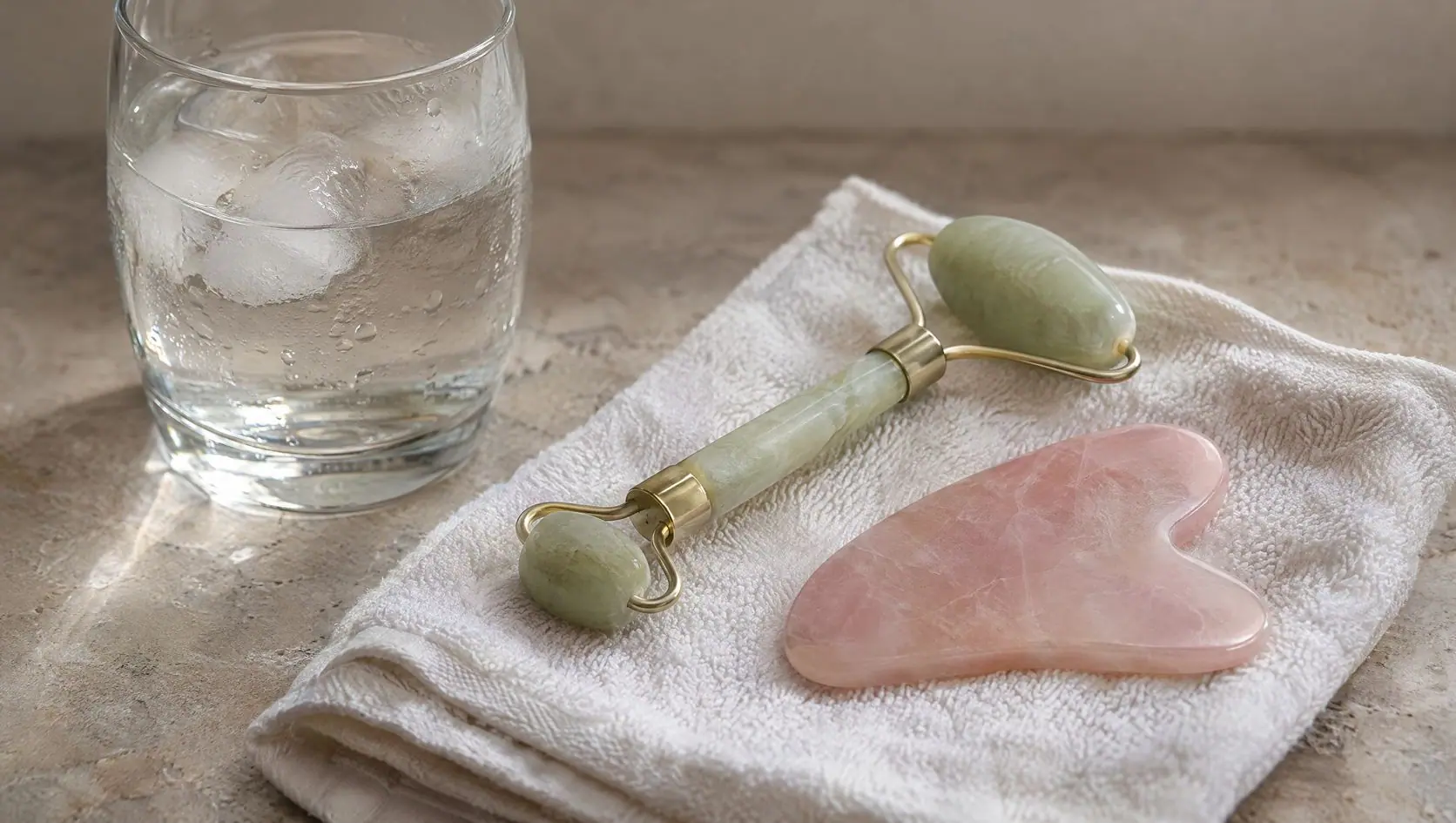
- Massage gently with light strokes from the center of your face out toward your ears, then down the sides of your neck, the way lymph drains. A facial roller or gua sha stone works the same way; keep the pressure light.
Over time:
- Drink water steadily through the day.
- Get regular, good-quality sleep.
- Manage allergies with your provider’s guidance, including antihistamines if they recommend them.
- If you smoke, quitting removes one of the factors the Mayo Clinic links to under-eye puffiness.
None of this needs to be perfect. Changing one or two habits can make a visible difference in how your face looks when you wake up.
Is It Always Fluid? When Puffiness Is Something Else
Sometimes the cause is not fluid at all. Puffiness that looks the same from morning to night may come from fat pads, aging changes or muscle, not overnight swelling. Hydration and a better pillow will not change that, because the cause is structural.
Long-term use of steroid medicines such as prednisone is one example. According to Cleveland Clinic, it can cause moon face: fat builds up along the sides of the face and makes it look round and puffy. It does not come and go with the time of day, and it calls for a conversation with the prescriber, not a skin treatment.
That is why a good consultation looks at the full picture. At Refresh MedSpa, a consultation with facial mapping, described on our Facial Puffiness page, looks at whether puffiness comes from fluid, fat or muscle. For mild, fluid-related puffiness, a HydraFacial (from $199) can leave skin looking refreshed. A wide lower face from a strong, clenching jaw muscle is a different question, covered on our jawline slimming page.
Track Your Morning Facial Puffiness for a Few Weeks
If your puffiness keeps coming back, a simple log can show what drives it. For two or three weeks, write a few quick notes each morning: how puffy your face looks, what you ate and drank the night before, how you slept, and whether allergies or your period played a role. A photo in the same light each day helps.
A pattern often shows up within a few weeks: puffy mornings after salty takeout, say, or after nights spent sleeping flat. The log also gives your provider real information if you do need a visit.
What Does Not Help
A few common ideas can backfire:
- Cutting back on water. It may seem logical, but mild dehydration can leave you looking and feeling worse, so keep sipping through the day.
- Rubbing or pulling the skin around your eyes. The skin there is thin, so gentle is better.
- Using diuretics or water pills on your own. Only take these if a provider prescribes them.
- Ignoring warning signs. Puffiness that does not match the normal pattern still deserves a real answer.
When to See a Healthcare Provider
Make an appointment if:
- Puffiness lasts all day, day after day, or lingers for more than a few days
- Swelling keeps coming back without a clear trigger
- Swelling comes with pain, warmth, redness, fever, itching or a rash
- Only one side of your face is swollen
- Simple changes like less salt and a better sleep position do not help
A provider can review your history, ask about medicines and allergies, examine your face, and order tests if needed. The cause decides the treatment, so a proper evaluation beats guessing at remedies.
The Short Version
Morning facial puffiness is usually a normal result of lying flat, eating salt, drinking alcohol or sleeping poorly, and it tends to fade within a few hours. Small habit changes often help. Swelling that lasts all day, builds over weeks, or comes with pain, fever or breathing trouble deserves a provider’s attention.
If your puffiness does not match the normal picture, or you are not sure what is behind it, a consultation can help. Learn more about facial puffiness, or book a consultation to talk through your options.
Frequently Asked Questions
Is morning facial puffiness normal?
Usually, yes. When you lie flat all night, fluid settles in your face, most of all around the eyes. Normal puffiness looks about the same on both sides, does not hurt, and goes down within 30 minutes to a few hours once you are up and moving.
Why is my face puffy in the morning?
Lying flat lets fluid spread into your face, and your lymph system clears it more slowly while you sleep. A salty dinner, alcohol, short sleep, allergies and your sleep position add to it. Puffiness under the eyes that stays all day may come from aging changes in the lower lids, not fluid.
How do you get rid of a puffy face in the morning?
Get up and move, drink a glass of water, and hold a cool compress on your face for a few minutes. A gentle massage from the center of your face outward can help too. To wake up less puffy, eat less salt at dinner, limit alcohol before bed and raise your head with an extra pillow.
Does drinking water help a puffy face?
Drinking water steadily through the day helps your body manage fluid. Cutting back on water to look less puffy tends to backfire, because mild dehydration can leave you looking and feeling worse.
Can alcohol or salty food cause a puffy face?
Yes. Salt makes your body hold on to water, so a salty dinner often shows on your face the next morning. Processed snacks, canned soups and fast food are common sources. Alcohol dehydrates you and widens blood vessels, which can leave your face flushed and swollen.
Can allergies cause a puffy face?
Yes. Dust, pet dander and pollen can inflame the tissue around your eyes and nose, and lying down lets fluid collect there overnight. Washing your bedding often, using allergen-proof covers and treating allergies with your provider's advice can help.
What health problems can cause facial swelling?
The Mayo Clinic lists dermatitis, kidney disease and thyroid eye disease among the medical causes of puffiness around the eyes, and infections and allergic reactions can also make the face swell. See a provider if swelling lasts all day, builds over weeks, affects one side only, or comes with pain, warmth, redness or fever.
When is facial swelling an emergency?
Get emergency care right away if your face swells suddenly along with your lips, tongue or throat, or if you have trouble breathing or swallowing. These can be signs of a serious allergic reaction.