
Dysport vs Botox: Which Is Better?
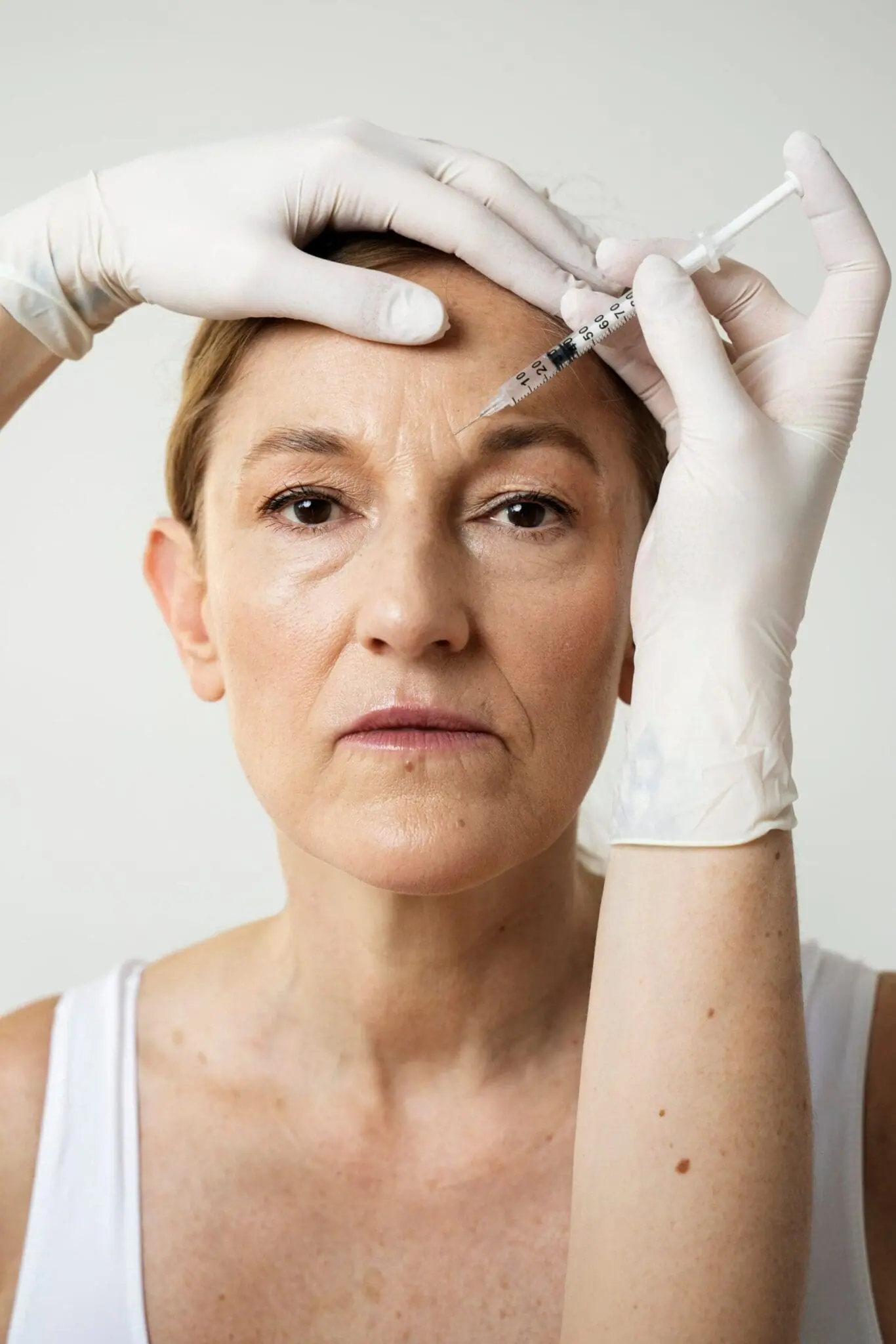
Neither Dysport® nor Botox® is better for everyone. Both can soften frown lines, but their approved uses and doses differ. Botox Cosmetic covers 3 common upper-face areas: frown lines, forehead lines and crow’s feet. Dysport’s cosmetic approval covers frown lines in adults under 65. Forehead and crow’s-feet treatment with Dysport is off-label. Your health, treatment area and past response should guide the choice.
Dysport compared to Botox at a glance
| Question | Dysport | Botox Cosmetic |
|---|---|---|
| What does it do? | Eases the muscle pull that causes expression lines | Eases the muscle pull that causes expression lines |
| Which upper-face uses are approved? | Moderate to severe frown lines in adults under 65 | Moderate to severe frown lines, forehead lines and crow’s feet in adults |
| What about forehead lines and crow’s feet? | Off-label uses | Approved uses, following the product’s treatment plan |
| How long does the frown-line effect last? | Many people see Dysport results for about 3 to 4 months; the label sets no fixed duration. | Refresh’s usual guide is about 3 to 4 months |
| Can units be swapped? | No | No |
| Is there a specific milk-allergy concern? | Do not use with cow’s-milk protein allergy | Review all toxin and ingredient allergies |
Both are approved by the FDA for specific uses. Approval does not remove the risks or mean every use is approved. “Off-label” means the product is being used outside its approved indication.
For the full service details, read our Dysport guide and Botox guide. Our wrinkle-relaxer menu covers the other brands available at Refresh.
Start with the area you want to treat
Frown lines are the vertical creases between your brows. Both products have a cosmetic indication for these lines, though Dysport’s approval has an age limit.
Forehead lines and crow’s feet need a different comparison. They are approved Botox Cosmetic uses. Dysport treatment in these areas is off-label and needs a clear discussion of the plan, risks and alternatives.
Masseter injections are also off-label for both products. If jaw pain is your concern, read the separate Botox and TMJ decision guide. For cosmetic jaw slimming, see jawline slimming.
Some lines remain visible even when your face is still. Your care team should check how much comes from muscle movement and how much comes from the skin itself. A different toxin may not solve a concern that needs another type of care.
Does Dysport work faster than Botox?
Neither product can be promised to work faster for you. First visible change and full effect are different stages. A fair comparison has to use the same stage for both products.
Refresh’s Botox guide is 3 to 5 days for the first visible change and around 2 weeks for the full effect.
Ask your injector when to assess your result. If you have an event coming up, discuss that before treatment. Do not count on an exact date or get extra injections because you still see movement in the first few days.
Does one last longer?
Many people see Dysport results for about 3 to 4 months; the label sets no fixed duration. Refresh’s usual guide for Botox is about 3 to 4 months.
Those figures come from different sources. Dose, treatment area and your response still need review.
Keep track of when movement returns and when the lines bother you again. Those may be different dates. See how long Dysport lasts and how long Botox lasts for more on timing.
Do not treat a repeat visit as a fixed obligation. Dysport should not be given more often than every 3 months. Botox Cosmetic has not been clinically evaluated for safe and effective dosing more often than every 3 months.
Why unit counts do not tell you which is stronger
Beauty Bank members pay $10 per unit for Dysport and $10 per unit for Botox. First-time clients pay $9 per unit (new patients only, 40-unit minimum) for Botox on their first visit. Your injector sets the number of units at your consultation.
A unit is a measure defined for that specific product. It is not a shared measure that makes the brands equal dose for dose.
If you received a certain number of Botox units before, that does not set your Dysport dose. Do not use an online conversion chart to choose how much you need.
The same caution applies to cost. A unit rate alone does not show the total treatment cost. Ask for the proposed product, treatment area, dose and total price.
At Refresh, Dysport is $13 per unit and Botox is $13 per unit, the same standard unit price. Because the units differ, the same unit price does not mean the same total. Full rates are on the pricing page.
For separate frown-line examples, the labeled doses are 50 Dysport units and 20 Botox units. At the standard rates, those cost $650 and $260, respectively. These are examples, not a dose conversion or a personal quote.
What should guide your choice?
Refresh also offers Xeomin and Jeuveau, both at $13 per unit. The Xeomin vs Botox comparison explains how Xeomin differs.
Bring your past treatment details if you have them. Useful information includes the brand, date, area, dose and how the result felt to you.
Your discussion can focus on:
- Which lines you want to soften.
- How much movement you want to keep.
- Whether the proposed use is approved or off-label.
- Any past side effects or poor response.
- The total cost and likely need for future care.
Placement, dose and your face all matter to how much movement remains after treatment.
Switching is also a clinical decision. Tell your injector about any toxin used recently, including injections for a medical condition. Do not add another product elsewhere to try to improve the effect on your own.
Who should avoid or delay treatment?
Do not have either treatment if you have an injection-site infection or an allergy to the toxin or its ingredients. Cow’s-milk protein allergy rules out Dysport.
Discuss nerve or muscle disease, breathing or swallowing problems, pregnancy or nursing, and all drugs and supplements you take. Include recent antibiotics, muscle relaxants and prior toxin injections. Defer cosmetic injections while pregnant or nursing.
Ask the prescriber before stopping any medicine. A concern about bruising is not a reason to stop a needed prescription yourself.
What are the downsides of Dysport?
Dysport can cause bruising, soreness, headache, nausea and unwanted muscle weakness, such as a drooping eyelid. It wears off and needs repeat treatment if you want to maintain the effect. Cow’s-milk protein allergy rules it out. Botox shares many of the same injection risks.
Why do I feel weird after Dysport?
A headache, nausea or soreness may leave you feeling unwell after Dysport. The cause depends on your symptoms, so contact your injector to describe what you feel and when it began.
Get immediate medical help for trouble breathing, swallowing or speaking, weakness spreading beyond the treated area, or vision changes. Toxin products carry a warning about effects beyond the injection site.
Vanessa Levine, APRN, NP-C, and Alexandrea Lobosco, APRN, both provide injections at Refresh. Book a consultation to compare a plan for your face. Local service details are on Dysport in Cape Coral and Botox in Cape Coral.
Frequently Asked Questions
Is Botox better than Dysport for frown lines?
Neither is better for every person with frown lines. Both have an approved cosmetic use for that area, with an under-65 age limit for Dysport. Your history, past response and goals help guide the choice, so bring the brand, date, area and dose of any earlier treatment to your consultation.
Is Dysport cheaper than Botox?
At Refresh, both have the same listed price of $13 per unit for Dysport and $13 per unit for Botox. The units are not interchangeable, so the same unit price does not mean the same total. A typical Dysport forehead treatment, an off-label use, starts at $150. Ask which product and dose your total includes.
What lasts longer, Botox or Dysport?
Neither is shown to last longer for everyone. Many people see Dysport results for about 3 to 4 months, and Refresh’s usual guide for Botox is also about 3 to 4 months. Those figures come from different sources, so track when movement returns on your own face and review it with your injector.
Can Dysport treat forehead lines?
Forehead treatment with Dysport is off-label. Botox Cosmetic has an approved forehead-line use under its labeled treatment plan. Ask which use is being proposed and why, and what the risks and alternatives are, before you agree to treatment. Off-label use is legal and common, but it should be explained to you.
Does a higher Dysport unit count mean it is stronger?
No, unit counts cannot be used to compare strength across these brands. Each product has its own dosing units, so 50 Dysport units and 20 Botox units are not a conversion. Your injector chooses a dose for the exact product, based on your face and treatment area.
Can I choose Dysport if I have a milk allergy?
No, you should not receive Dysport if you are allergic to cow’s-milk protein. Tell your care team about the allergy before any treatment plan is made. A different brand still needs a full review of your allergies and health history.
What are the downsides of Dysport?
Dysport can cause bruising, soreness, headache, nausea and unwanted muscle weakness, such as a drooping eyelid. It wears off, so maintaining the effect needs repeat treatment. Get immediate medical help for trouble breathing, swallowing or speaking, or weakness spreading beyond the treated area.
Is Dysport the same as Botox?
No, they are different products, though both are botulinum toxin type A injections that relax the muscles behind expression lines. Their approved uses, dosing units and ingredients differ, and Dysport cannot be used with a cow’s-milk protein allergy. Your injector doses each product on its own scale.
The right comparison is the plan for your face, including its limits and risks. Results and the time they last vary with each treatment.
This is general information about two prescription products. A clinician must review your history and explain any off-label use before treatment.